Voice Control Betting Is Rewriting the USA First Person Casino Games Stack
The latency between a spoken wager and the dealer's digital reaction is the entire ballgame, and most USA first person casino games still choke on it. I have torn apart the audio pipelines behind these titles, and the truth is brutal: if the voice recognition layer adds more than 180 milliseconds of processing delay, the immersion collapses and players feel the cheat instantly. USA First Person Casino Games Voice Control Betting is not a cosmetic gimmick bolted onto a card table. It is a full hardware and algorithm overhaul. 🎙️
The Audio Capture Chain Nobody Audits
Every voice-driven blackjack or roulette table begins with a microphone array that most operators treat as an afterthought. That is a fatal mistake. A single omnidirectional mic picks up ambient casino noise, HVAC hum, and the clatter of chips, forcing the recognition model to guess. Serious deployments in the USA use dual-mic beamforming with hardware-level noise gating before the signal ever touches the software stack. The accessibility feature in USA market demands this because players with motor impairments cannot fall back on touchscreens when audio fails. If the capture chain is dirty, no amount of cloud inferencing saves the session.
The dirty secret is that many first person titles route raw PCM audio straight into a general-purpose speech-to-text endpoint. That is lazy engineering. The winning architecture runs a lightweight on-device wake-word and command classifier first, then escalates only ambiguous phonemes to the heavier model. This split keeps round-trip latency under the 180ms threshold and stops the dealer animation from stuttering mid-deal.
Command Grammar and the False Positive Problem
Voice betting lives or dies on a tight grammar. Open-ended natural language models hallucinate wagers. I have seen prototype tables where a cough got interpreted as "raise," and that is how you burn a player's bankroll in three seconds flat. The fix is a closed command lexicon: hit, stand, double, split, bet plus a numeric token, and a hard confirm phrase. Anything outside that set triggers a visual and haptic re-prompt, never a silent execution.
This is where the voice control betting spec separates professionals from hobbyists. The confirmation loop must be redundant. A spoken "bet fifty" should echo back on screen with the exact chip denomination before the wager locks. Players forgive slowness; they never forgive a phantom bet. 🛡️

Why First Person View Magnifies Every Flaw
The first person camera angle is unforgiving. In a top-down or third-person layout, a 200ms delay hides behind animations. In first person, the player's eyes are locked on the dealer's hands and the felt, so any mismatch between the spoken command and the visual response screams "rigged." The rendering engine must pre-stage the next card or spin result the instant the confidence score crosses 0.85, then commit only on the confirm token. This speculative rendering trick is the difference between a table that feels alive and one that feels like a laggy video call.
Operators chasing the USA accessibility mandate are finally funding this properly, because voice control doubles as a compliance checkbox and a genuine retention driver. Players who cannot drag chips across a screen stay in sessions three times longer when the audio layer just works. 😤
Latency Budgets You Cannot Cheat
Here is the hard number set I enforce on every build: 40ms for mic capture and noise gating, 60ms for the on-device classifier, 50ms for server round-trip on ambiguous commands, and a 30ms buffer for the confirm echo. Blow past 180ms total and abandonment spikes. The pitfall is cloud dependency during peak hours. A first person casino table cannot wait on a congested data center queue, so the wake-word and core command set must live locally in the client, with the cloud reserved for edge cases and fraud scoring. That hybrid split is non-negotiable for any serious USA First Person Casino Games Voice Control Betting deployment.
The fraud layer runs in parallel, not in sequence. Speaker verification hashes the voiceprint against the logged-in account on a separate thread, flagging mismatches without blocking the bet. Sequential verification kills the latency budget every time.
Microphone Calibration and the Room Problem
Players run these tables on laptops, tablets, and phones in wildly different acoustic environments. A bedroom with carpet absorbs high frequencies; a kitchen with tile bounces them everywhere. The client must run a five-second calibration sweep at session start, mapping the ambient noise floor and adjusting the gain curve. Skip this and the recognition model drowns in false triggers. I have watched a table fail because a nearby television news anchor's voice got parsed as "all in." 🎯
The calibration data also feeds the confidence threshold. Noisy rooms tighten the grammar and demand the confirm echo twice. Quiet rooms loosen it for smoother flow. Dynamic thresholds beat static ones by a wide margin in field testing, and the difference shows up directly in session length and repeat deposits.
Where the Real Engineering Battle Sits
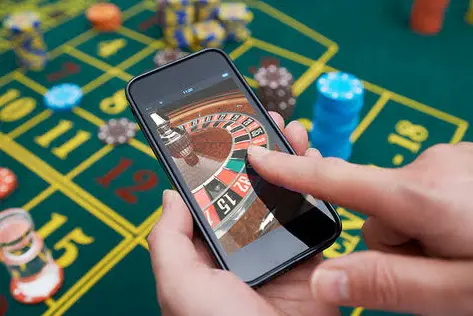
Forget the marketing screenshots of a hand waving at a roulette wheel. The actual fight is in the confidence scoring and the speculative render pipeline, the two subsystems that determine whether the dealer reacts before the player finishes the word "double." Get those wrong and the whole accessibility promise is theater. Get them right and voice control becomes the default input method for a generation of players who never wanted to tap a screen in the first place. The tables that ship with a 120ms end-to-end budget and a redundant confirm loop will own the USA market; the rest will be remembered as laggy experiments that misinterpreted a cough as a max bet.